
New & reopened chat
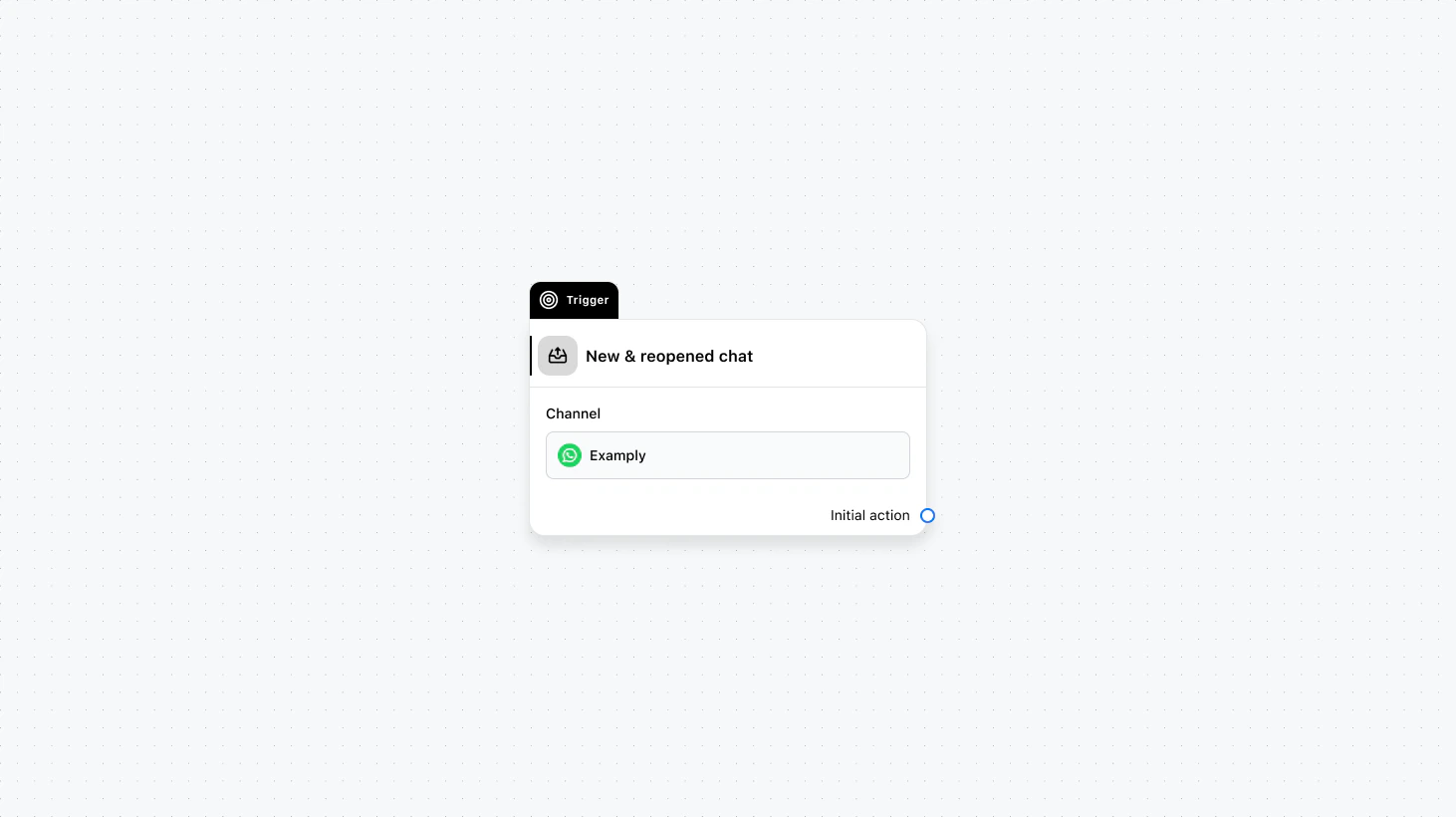
Fields
- Channel (required): Select the channel where this trigger will run.
- When to trigger (optional): Add a condition to narrow the audience based on specific conditions.
- Save text reply to (optional): Save the contact’s text reply to an automation variable.
- Save file reply to (optional): Save the contact’s file reply to an automation variable.
Use cases
- Single welcome flow for all opens: Send one greeting and qualification flow whether the contact is new or returning, without maintaining two separate automations.
- Unified triage: Route or assign every opened chat the same way (e.g. AI first, then handoff) regardless of first-time vs. reopened.
- Always capture the first message: Use “Save text reply to” so you can store what the contact said when they opened the chat and use it in later steps.
New incoming chat
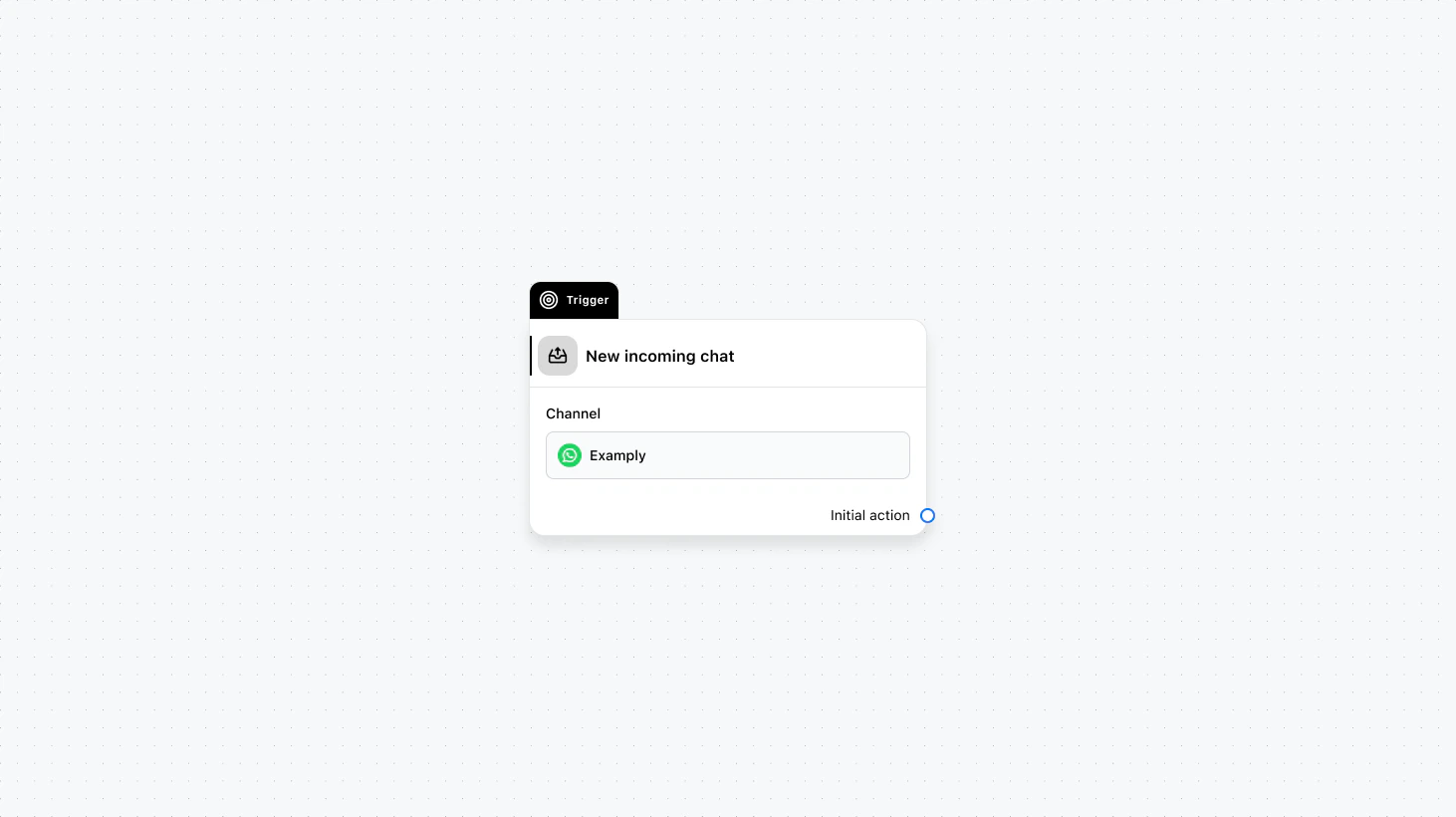
Fields
- Channel (required): Select the channel where this trigger will run.
- When to trigger (optional): Add a condition group to narrow the audience based on specific conditions.
- Save text reply to (optional): Save the contact’s text reply to an automation variable.
- Save file reply to (optional): Save the contact’s file reply to an automation variable.
Use cases
- First-time welcome and onboarding: Send a welcome message, collect basic info, or run a qualification flow only when someone messages you for the first time.
- New-lead handling: Trigger lead scoring, CRM creation, or assignment rules only for brand-new conversations, not when an existing chat is reopened.
- Channel-specific first contact: Use “When to trigger” to run different first-time flows by channel (e.g. WhatsApp vs. Live Chat) or by attribute.
Reopened chat
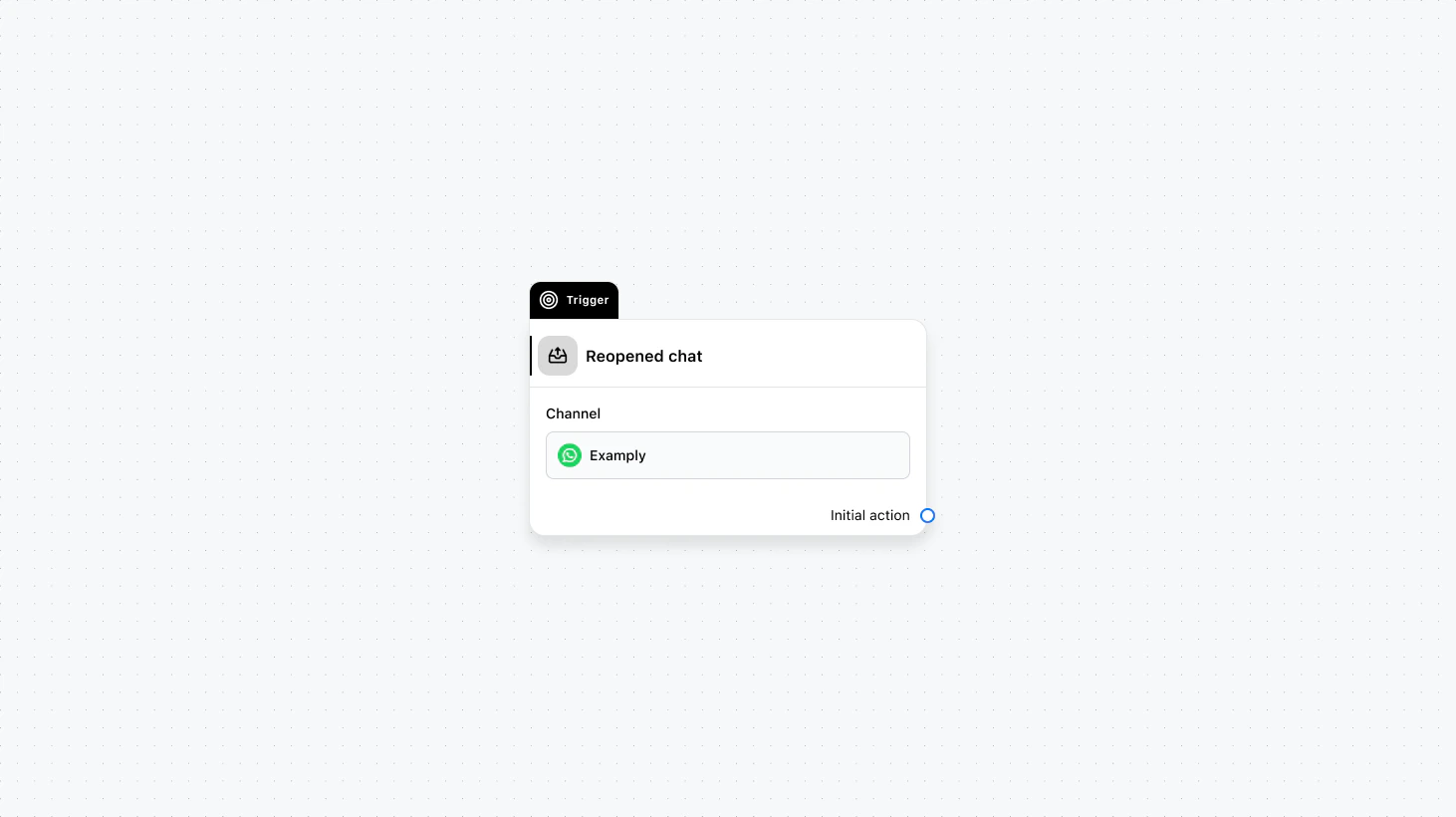
Fields
- Channel (required): Select the channel where this trigger will run.
- When to trigger (optional): Add a condition group to narrow the audience based on specific conditions.
- Save text reply to (optional): Save the contact’s text reply to an automation variable.
- Save file reply to (optional): Save the contact’s file reply to an automation variable.
Use cases
- Welcome-back message: Send a “We’re here to help again” or “Your case is still open” message when a contact reopens a closed chat.
- Reassign without full welcome: Route or assign returning chats to the right team or agent without repeating the first-time welcome flow.
- Returning-customer logic: Run different flows (e.g. loyalty, win-back) only when someone comes back after a closed conversation.
Chat closed
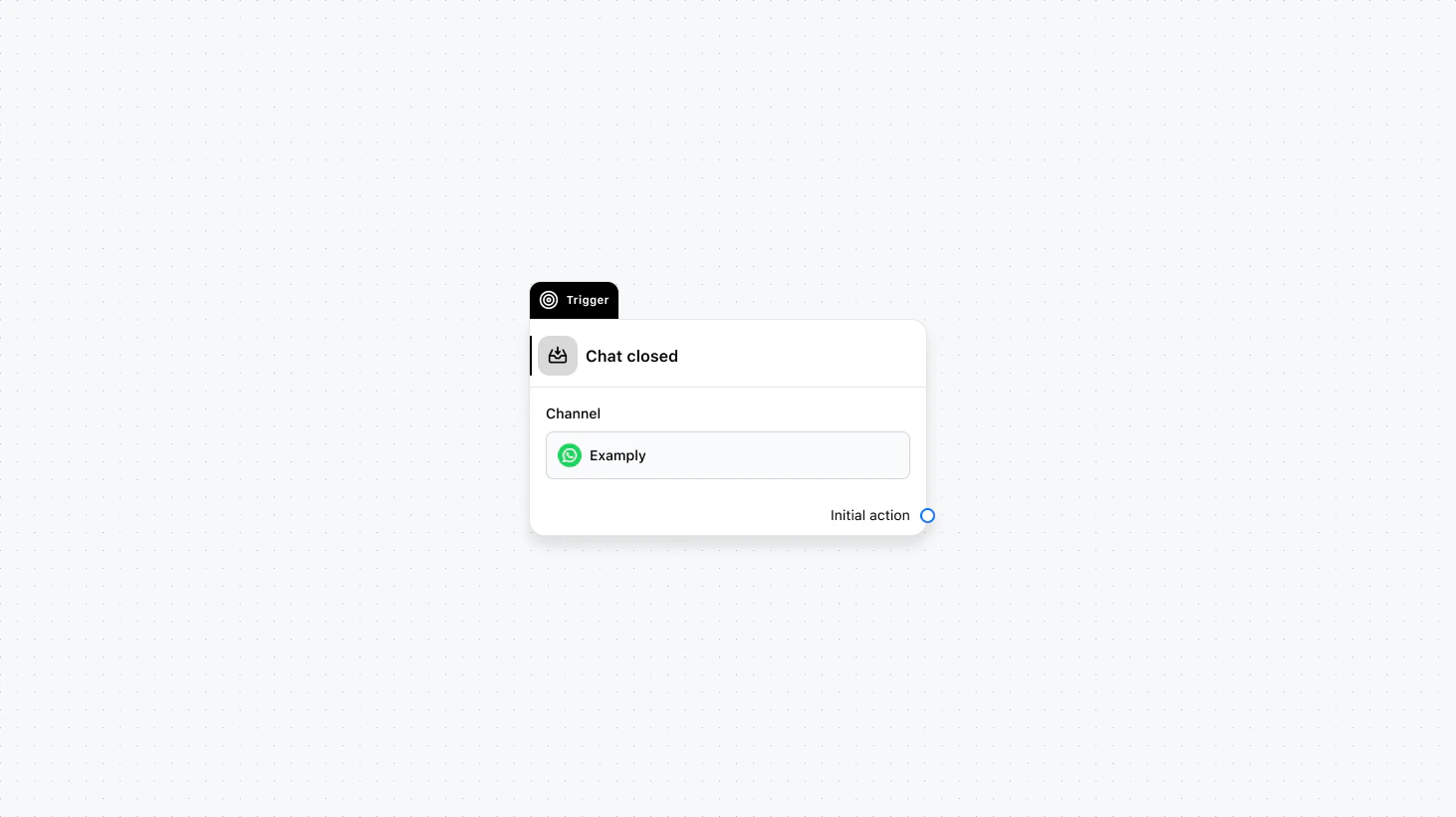
Fields
- Channel (required): Select the channel where this trigger will run.
- When to trigger (optional): Add a condition group to narrow the audience based on specific conditions.
Use cases
- Post-conversation survey: Send a satisfaction or NPS survey (e.g. via email or another channel) as soon as the chat is closed.
- Delayed follow-up campaign: Start a delay, then add the contact to a campaign or send a follow-up message after the conversation has ended.
- Logging and reporting: Trigger an API call or internal notification when a chat is closed to update your CRM or analytics.
Chat assigned
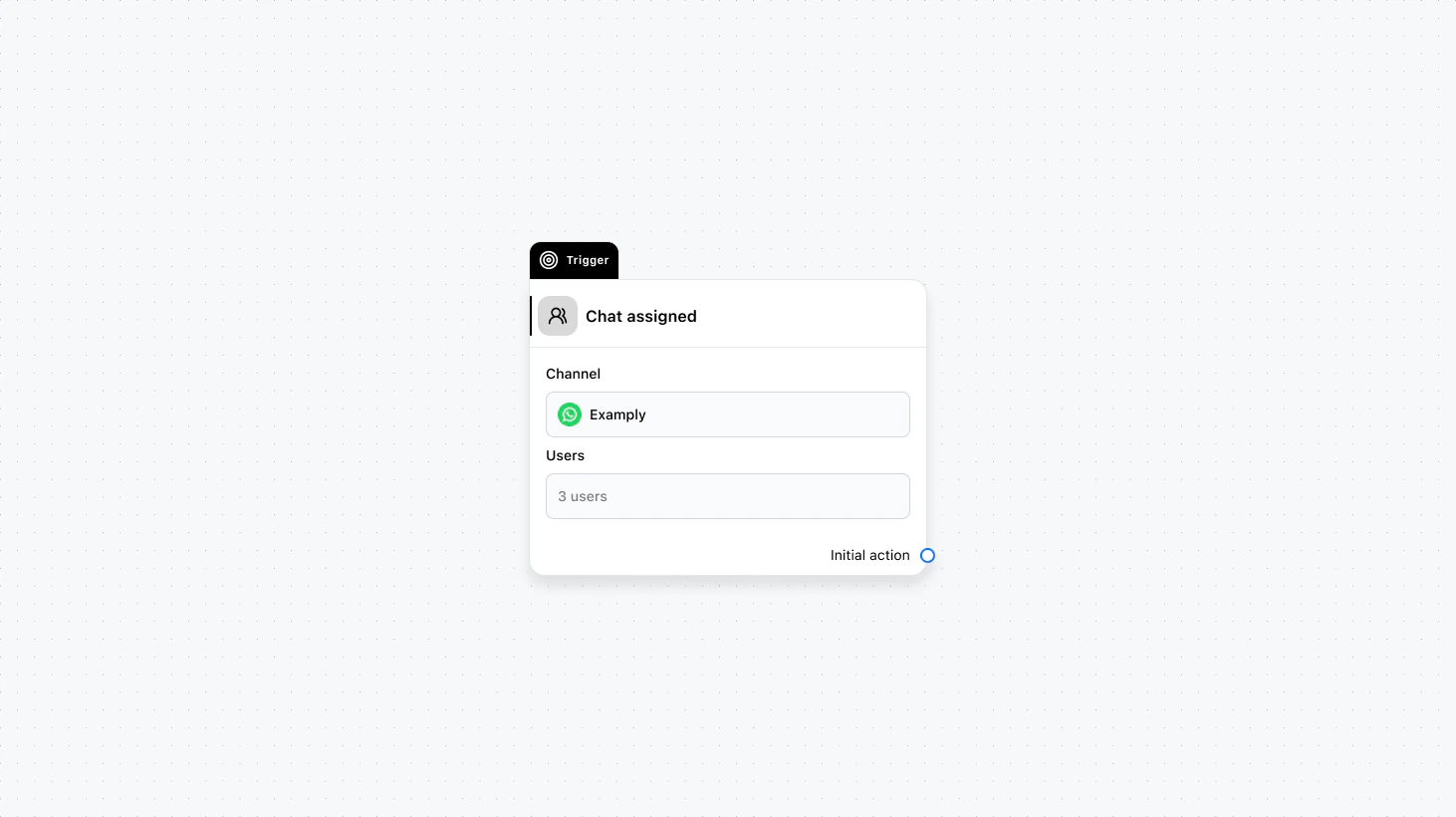
Fields
- Channel (required): Select the channel where this trigger will run.
- Users (required): Select the users for whom to fire this trigger.
Use cases
- Notify the assigned agent: Send an email or internal notification to the user who received the chat so they know a new conversation was assigned to them.
- Role-specific workflows: Run different automations when a chat is assigned to support vs. sales (e.g. different templates or next steps).
- Update external systems: When a specialist is assigned, call an API to update your ticketing system or CRM with the assignee.
Chat moved
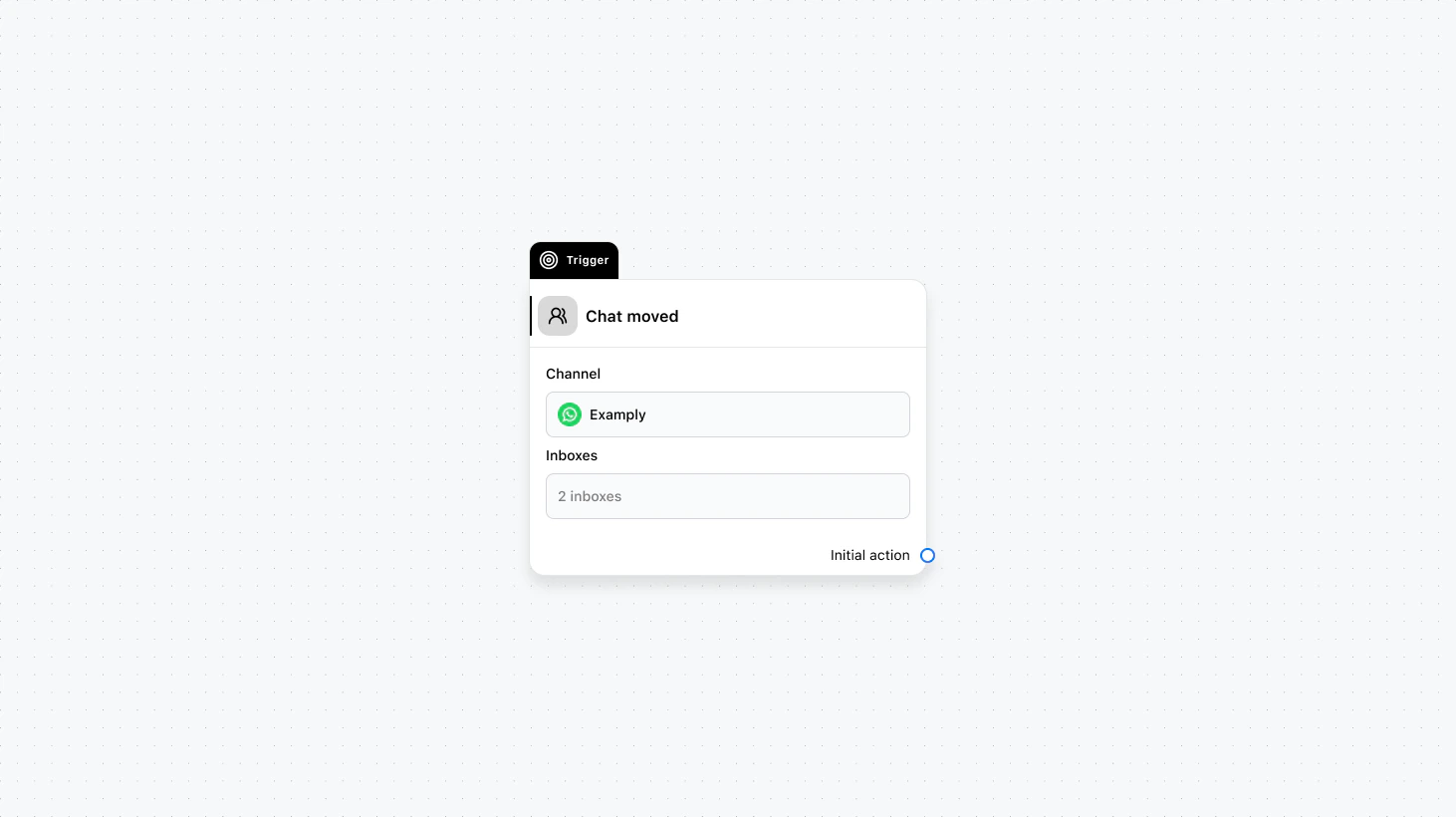
Fields
- Channel (required): Select the channel where this trigger will run.
- Inboxes (required): Select the inboxes for whom to fire this trigger.
Use cases
- Inbox-specific handling: When a chat is moved to Sales, send a sales-focused message or assign to a sales rep; when moved to Support, run a support triage flow.
- Notify the team whose inbox received the chat: Send an internal alert or assign a default agent when a chat lands in a specific team’s inbox.
- Sync with routing rules: Trigger an API or update attributes when a chat is moved so your external routing or reporting stays in sync.
New incoming message
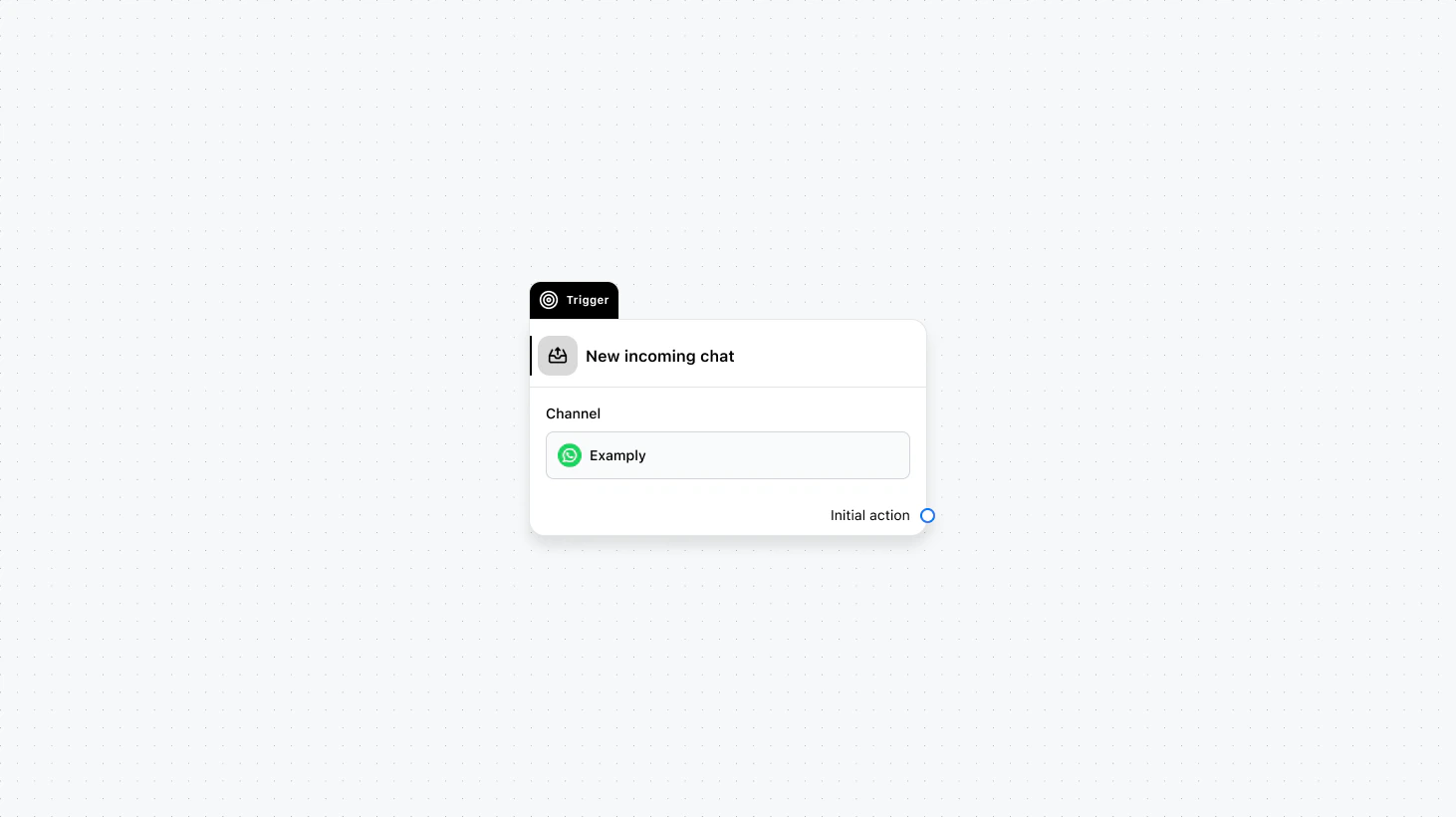
Fields
- Channel (required): Select the channel where this trigger will run.
- When to trigger (optional): Add a condition group to narrow the audience based on specific conditions.
- Save text reply to (optional): Save the contact’s text reply to an automation variable.
- Save file reply to (optional): Save the contact’s file reply to an automation variable.
Use cases
- Keyword-based routing: Run only when the message contains specific words (e.g. “refund”, “cancel”) and then route, assign, or reply accordingly.
- Save and reuse the reply: Use “Save text reply to” or “Save file reply to” so the next steps (e.g. AI Transform, Condition, or a template) can use what the contact just said.
- Per-message AI or logic: Trigger an AI employee or intention recognition on every new message so you can respond or branch based on the latest content.
New Instagram comment
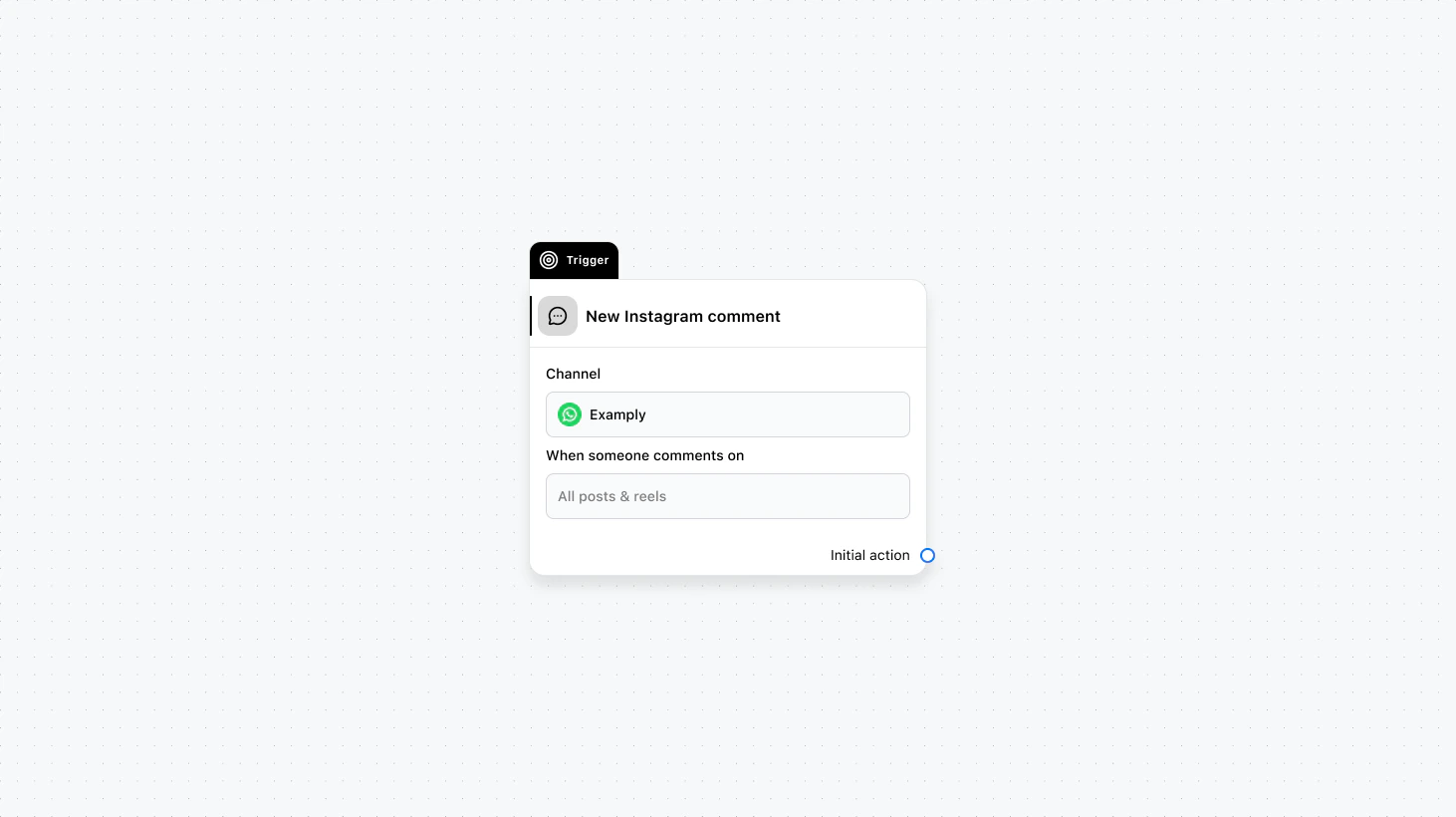
Fields
- Channel (required): Select the channel where this trigger will run.
- When someone comments on (required): Select between “All posts & reels” or “Specific posts/reels” and then select the posts/reels.
- When to trigger (optional): Add a condition group to narrow the audience based on specific conditions.
Use cases
- Campaign-specific comment reply: Use “Specific posts/reels” to auto-reply to comments on a single post or reel (e.g. contest, product launch) and optionally invite commenters into DMs.
- General comment-to-DM flow: Use “All posts & reels” to reply to comments across your account and invite people into a DM conversation with a consistent message.
- Conditional handling: Use “When to trigger” to reply only when the comment contains certain words or to route high-intent commenters differently.
Contact created
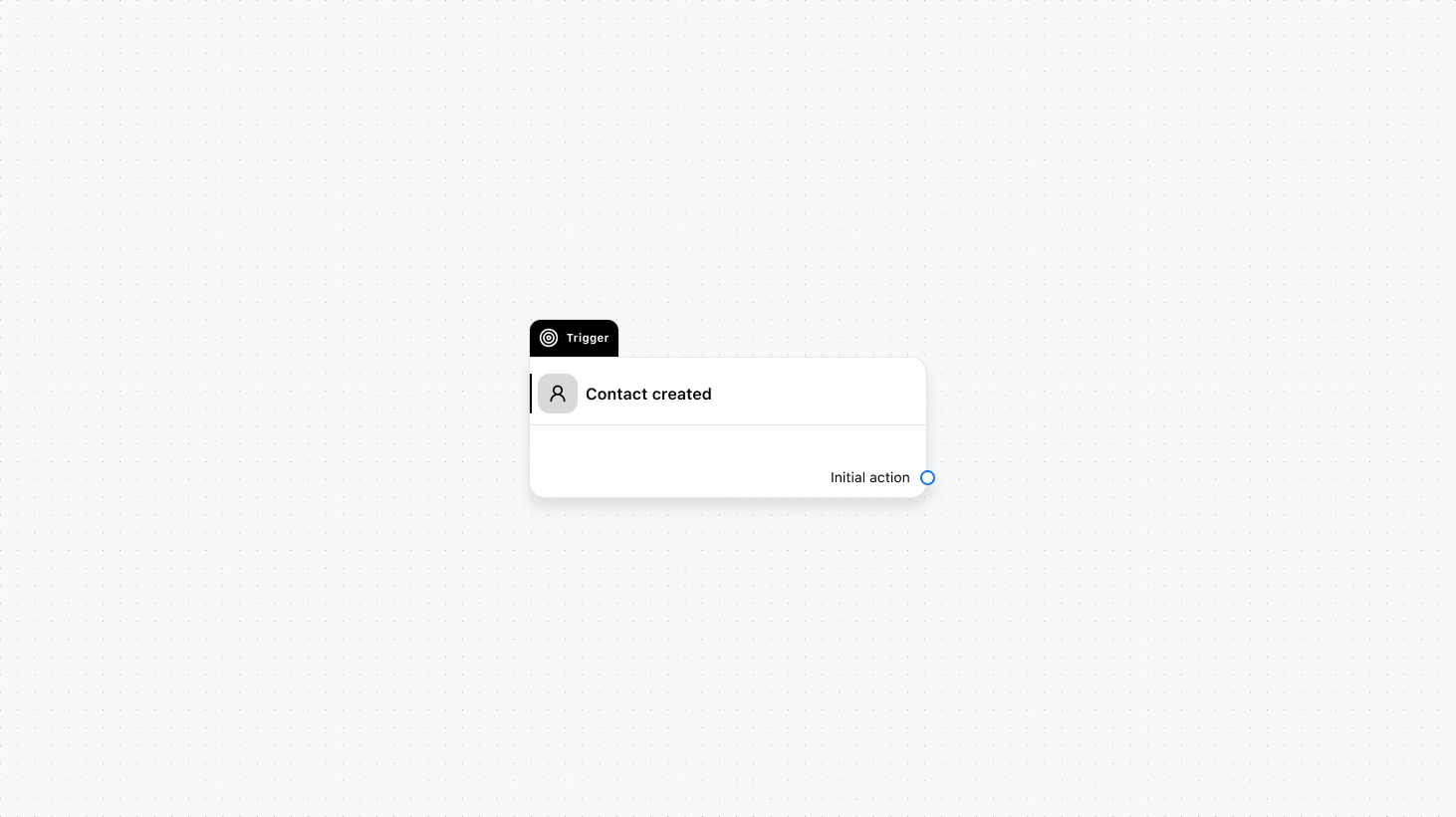
Fields
- When to trigger (optional): Add a condition group to narrow which contacts should start this automation (e.g. only contacts from a specific source or with certain attributes).
Use cases
- Enrichment on create: Call an API to enrich the contact (company, location, lead score) and store results in attributes.
- Auto-label new contacts: Add labels such as “new”, “lead”, or “needs_enrichment” immediately after creation.
- Kick off lifecycle: Subscribe the contact to a journey or campaign the moment they’re created.
Contact attribute updated
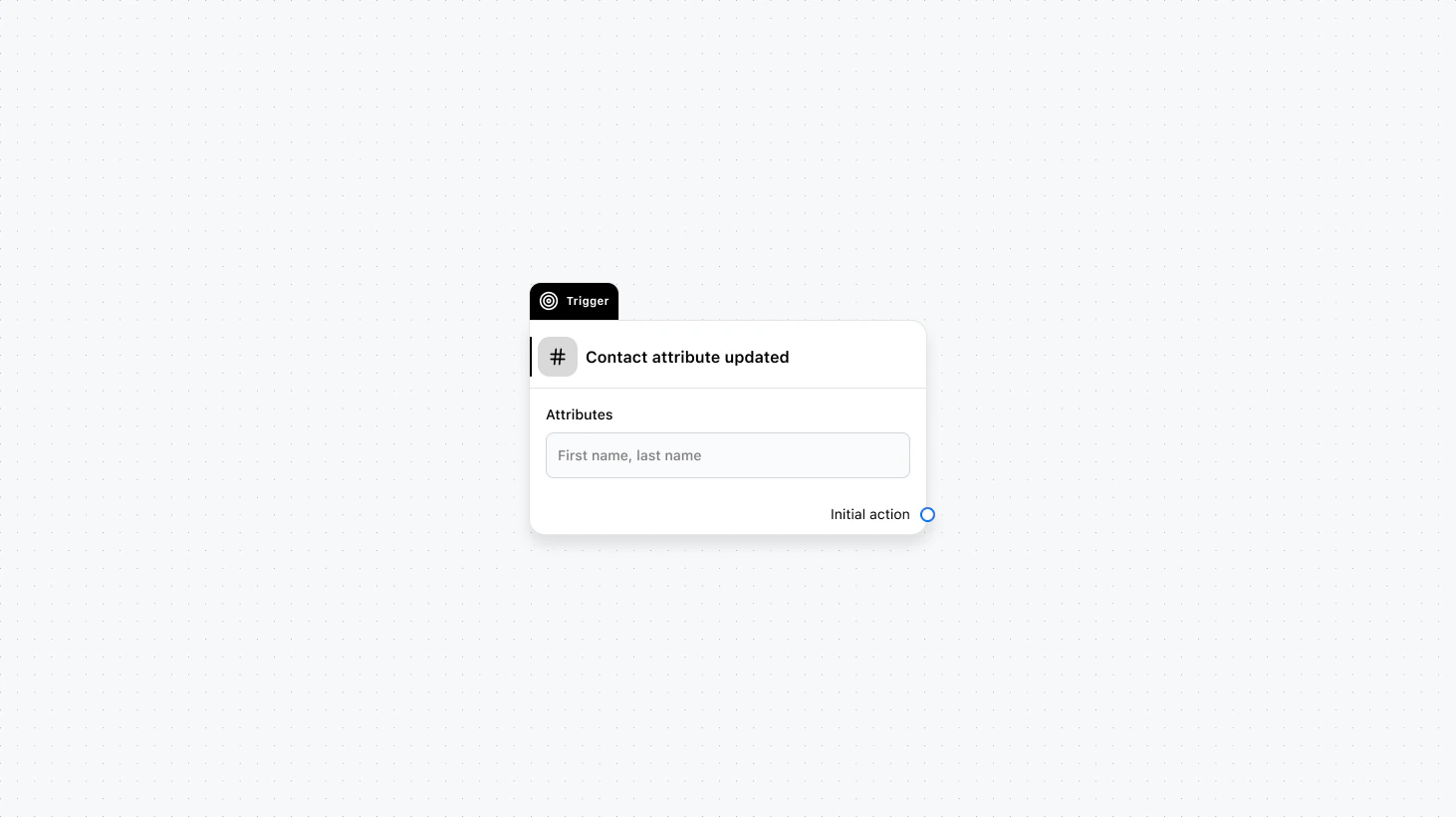
Fields
- Attributes (required): Select which contact attributes should trigger this automation when they’re updated.
- When to trigger (optional): Add a condition group to narrow which updates should start the automation (e.g. only when status becomes “qualified”).
Use cases
- React to qualification: When
lead_statusbecomes “qualified”, notify sales or start a sales outreach flow. - Keep systems in sync: When key attributes change, call an API to update your CRM or data warehouse.
- Progression-based automation: When
onboarding_stepchanges, send the next message or subscribe the contact to the next journey stage.
Label added
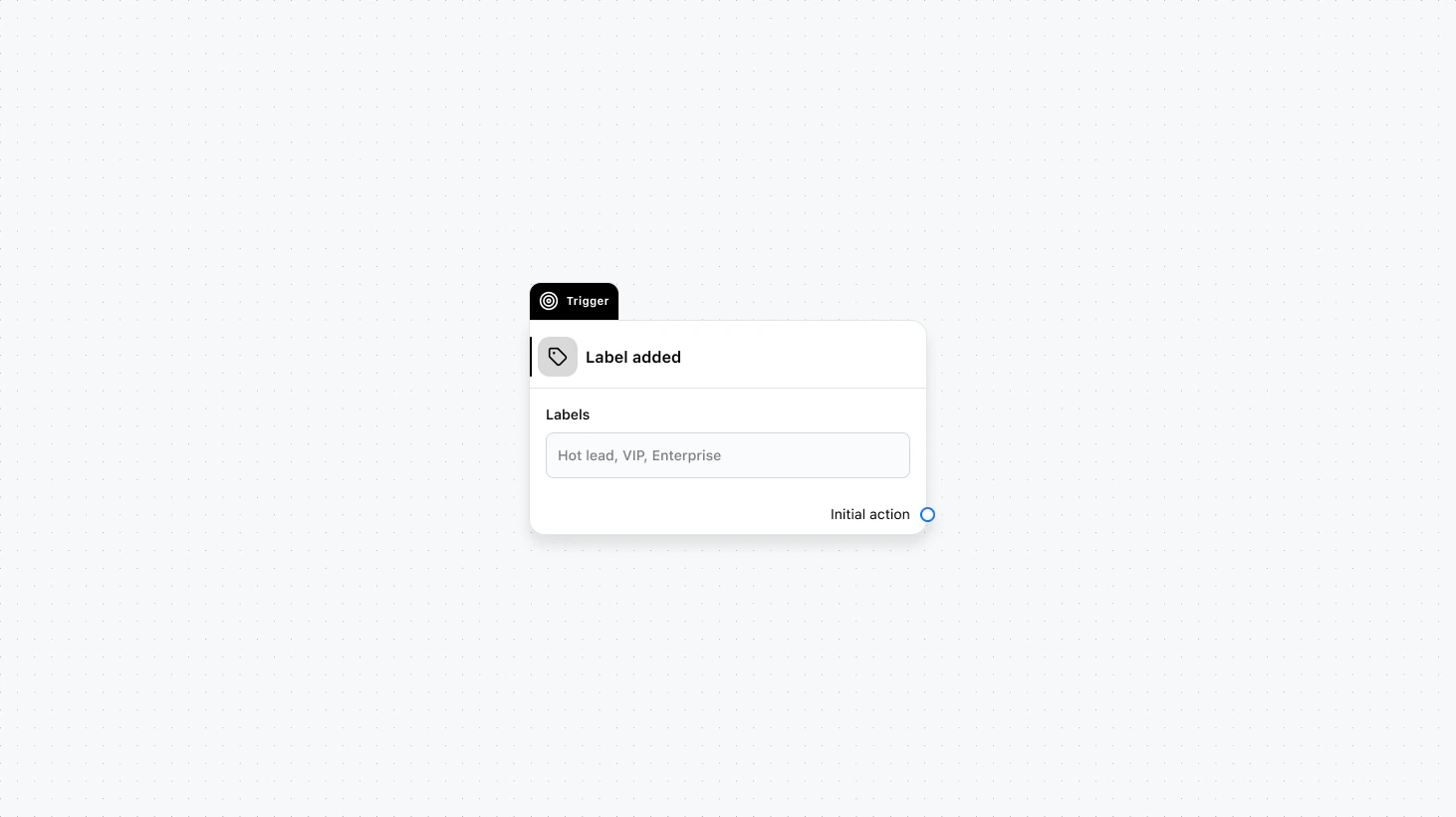
Fields
- Labels (required): Select the labels that should trigger this automation when added.
- When to trigger (optional): Add a condition group to narrow which labeled contacts should start the automation.
Use cases
- Start segmented flows: When “VIP” is added, start a priority handling automation or notify a manager.
- Ops handoff: When “needs_follow_up” is added, assign a task, send a reminder, or add the contact to a follow-up campaign.
- Qualification tags: When “high_intent” is added, start an AI or routing flow to get them to the right team faster.
Label removed
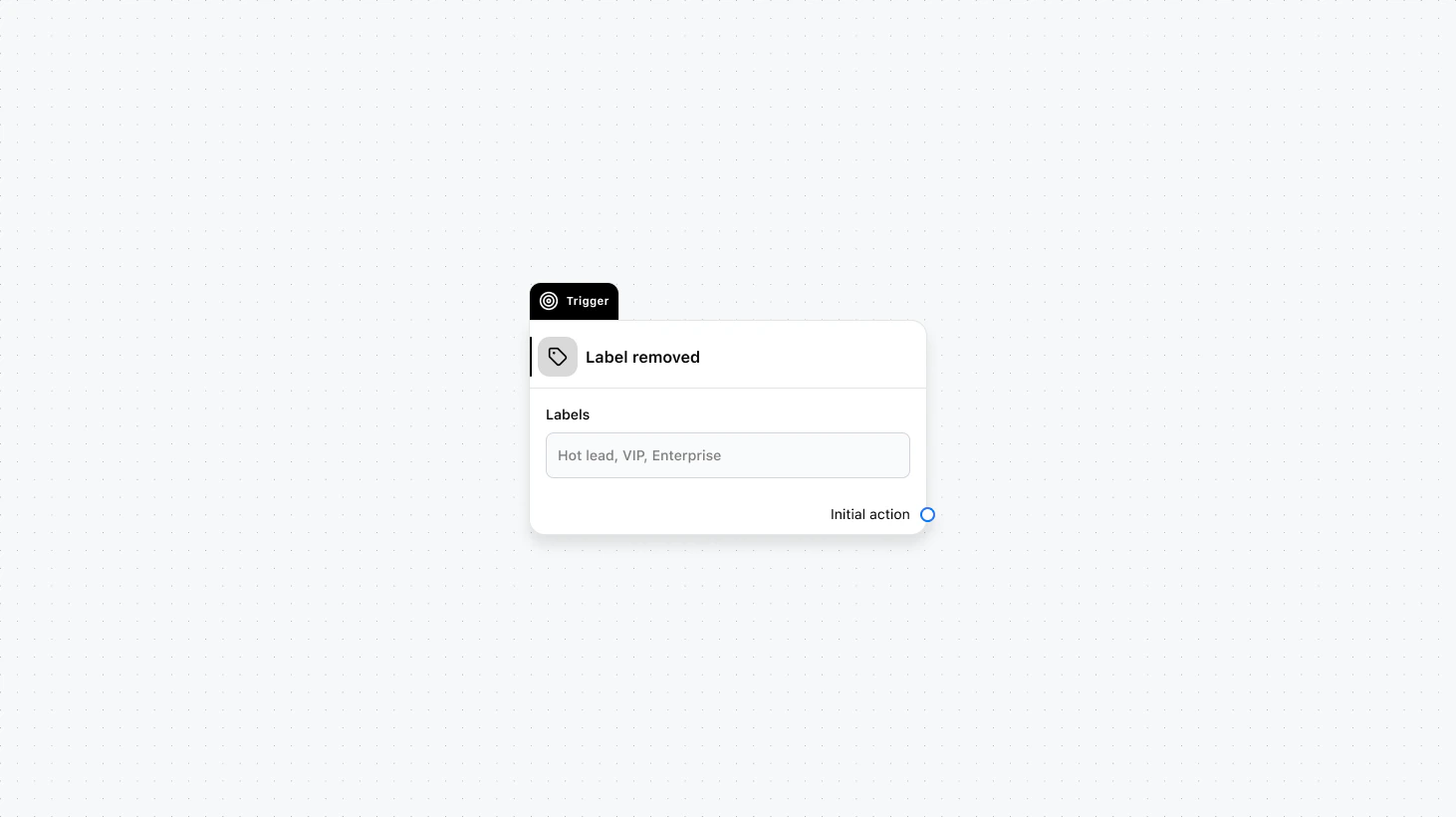
Fields
- Labels (required): Select the labels that should trigger this automation when removed.
- When to trigger (optional): Add a condition group to narrow which contacts should start the automation.
Use cases
- End a lifecycle: When “trial” is removed, subscribe to a post-trial journey or update the contact’s status in external systems.
- Reverse segmentation: When a label is removed (e.g. “needs_follow_up”), clear reminders, stop related automations, or update CRM flags.
- Clean up attributes: When a temporary label is removed, clear temporary automation variables or attributes tied to that segment.
Webhook received
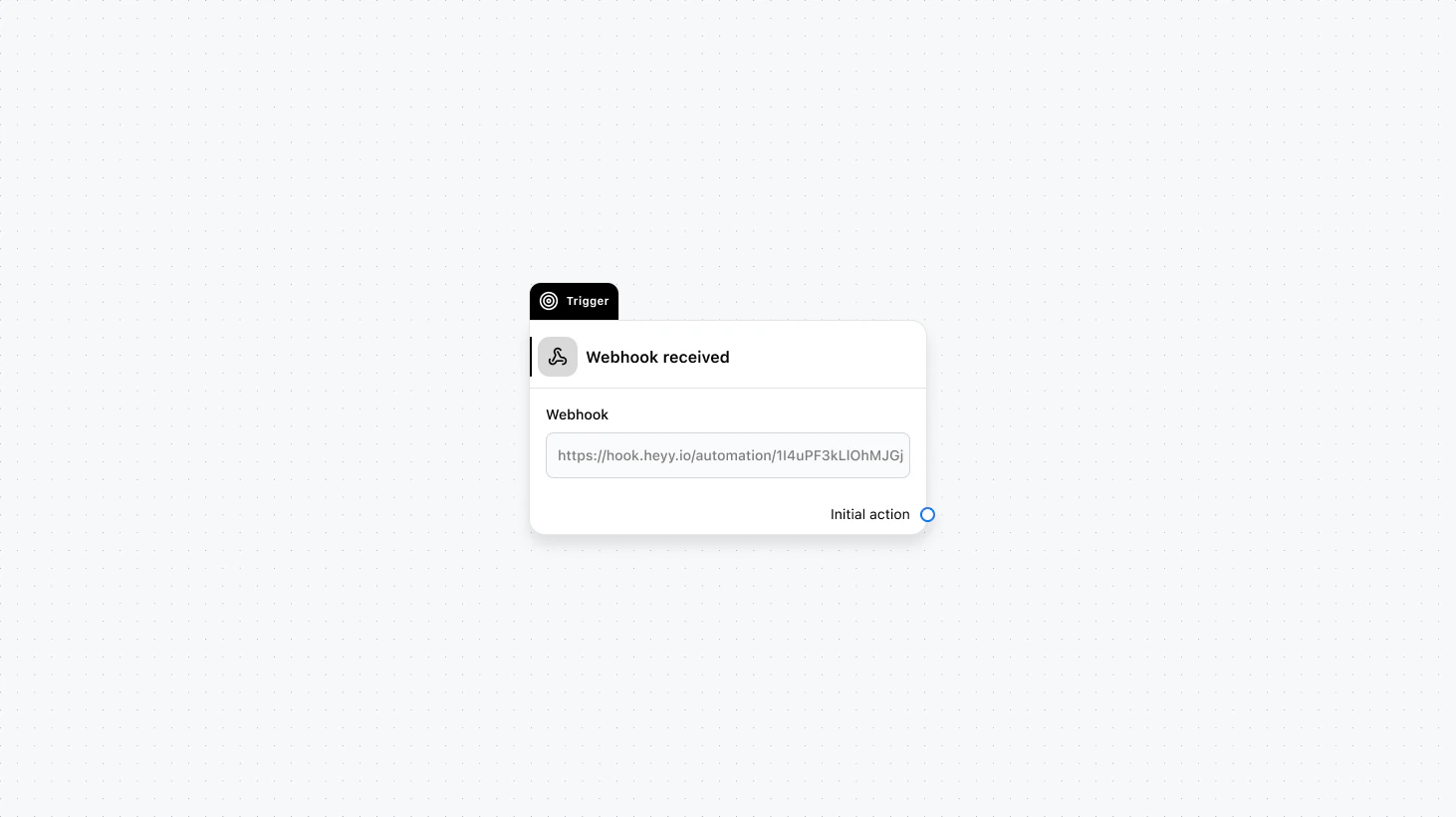
Fields
- Webhook endpoint (required): Choose the webhook endpoint that should trigger this automation.
- Search contact by (optional): Configure how Heyy should find the contact in the webhook payload (e.g. by contact ID, email, or phone number).
- Data mapping (optional): Map values from the webhook JSON payload into contact attributes or automation variables.
Use cases
- External events → messaging: When a payment succeeds or an order ships, start an automation that sends an update to the customer.
- Sync enrichment data: When your backend posts enrichment results, map fields into contact attributes and branch based on them.
- Unified automation entry point: Trigger the same automation from multiple systems by posting to the endpoint and mapping fields into variables.
Manual trigger
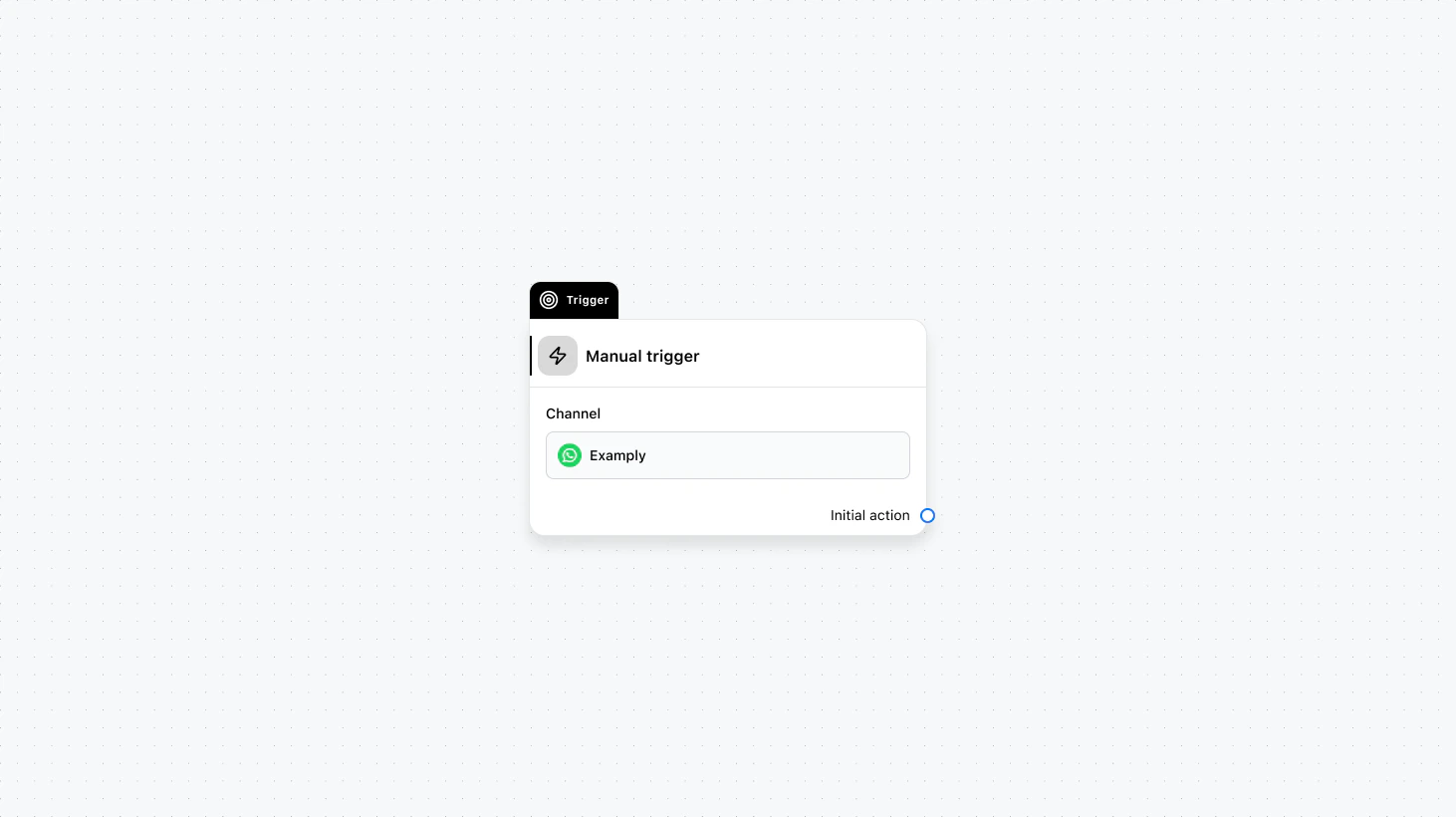
Fields
- Channel (required): Select the channel where this trigger will run.
Use cases
- Reusable sub-flows: Build one automation (e.g. send survey, add to campaign) and start it from multiple places—other automations, campaigns, or the Inbox—using the Start Other Automation action and variable mapping.
- API- or campaign-driven flows: Start the automation via API or when a contact enters a campaign, so the flow runs only when you or an external system decides, not on every new message.
- Scheduled or bulk actions: Use manual trigger for flows that run on a schedule, from a bulk action, or when an agent clicks “Run automation” in the Inbox.